Timeline of LGBTQ+ History at UIUC
1971: In September, students create the Gay Liberation Front, UIUC’s first queer student organization. The group became increasingly political under the leadership of Jeff Graubart, who ran for mayor of Urbana and pushed for a human rights ordinance in the town.
1972: Champaign and Urbana repeal local cross-dressing laws used to target LGBTQ+ people.
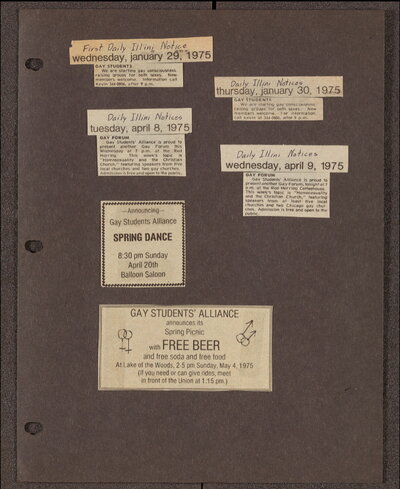
1975: The Gay Illini, a Registered Student Organization, emerged out of an earlier version of the Gay Students' Alliance. The Gay Illini hosted events including coffeehouse meetings, socials, benefits, Pride and awareness activities, organized demonstrations, and more. The organization has changed its name several times throughout its history.
Urbana passes a Human Rights Ordinance that protects individuals from discrimination based on sexual orientation; it is the first city in Illinois to do so. Champaign passes a similar ordinance in 1977.
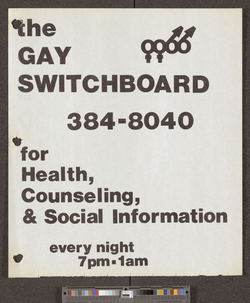
1978: The Gay Switchboard begins providing LGBT information and support to callers from the greater community.
1980: University students Terry Cosgrove and Patrick Forbes are denied the right to dance together at a disco in a local hotel. After filing a complaint under Champaign's Human Rights Ordinance, both men receive an apology from the hotel, and the hotel changes its policy to allow anybody to dance with anybody. Under separate legal action, the two receive a $1,000 settlement from the hotel.
1987: Chancellor Mort Weir commissions a task force to look at LGBT students’ needs. The task force report recommends that the university create a center or office dedicated to the needs of LGBT students.
The university changes its non-discrimination policy to include sexual orientation as a protected class due to protests by the Gay and Lesbian Illini organization.
1989: Champaign and Urbana’s mayors declare June 28th to be "Lesbian and Gay Pride Day," largely influenced by the 20th anniversary of the Stonewall riots
1992: Out On Campus, a grass roots faculty, staff, and graduate student social organization, forms. It becomes an activist organization when the Vice Chancellor for Student Affairs prevents a lesbian housing director from sharing her residence hall apartment with her same-sex partner; opposite-sex couples could share apartments.
1993: The university housing policy changes so that residence hall directors can have same-sex partners live with them in residence hall apartments.
The Office of Lesbian, Gay, Bisexual, and Transgender Concerns is created and reports to the Chancellor, which is an unusual arrangement. The office shares its space with graduate assistants of a different office on the third floor of the Illini Union.
The Counseling Center’s Sexual Orientation Diversity Allies (SODA) committee develops a training module for a faculty/staff ALLY Network and offers its first training.
1995: The Office’s reporting line moves from the Chancellor’s Office to the Office of the Dean of Students, where it joins the African American Cultural Center, La Casa Cultura Latina, the Office of Women’s Programs, and eventually the Asian American Cultural Center and the Native American Cultural Center.
2001: The Office works with a group of students to sponsor the Midwest Bisexual, Lesbian, Gay, Transgender, Ally College Conference, a three-day conference that brought about 1200 students from 50 schools in 15 states to UIUC. The students added the word Ally to the name in recognition of the important role that allies play in supporting the LGBT community.
2002: Shige Sakurai, an undergraduate intern, creates the Queers of Color Coalition. After leaving UIUC, Shige creates National Pronouns Day.
2006: Campus community members persuade the Interim Chancellor that the Office needs full-time staff to be effective. For the first time, the Office receives funding for a director, assistant director, and programming; the Office also gains additional space in the Illini Union. Student groups and a variety of professionals, including Counseling Center clinical counselors specializing in sexuality and gender identity, an advising staff member, a University Library librarian, Career Center paraprofessionals, and a campus minister from McKinley Presbyterian Church, begin utilizing the space. The Office’s name changes to the Office for Lesbian, Gay, Bisexual and Transgender Resources because the word “concerns” no longer fits its mission.
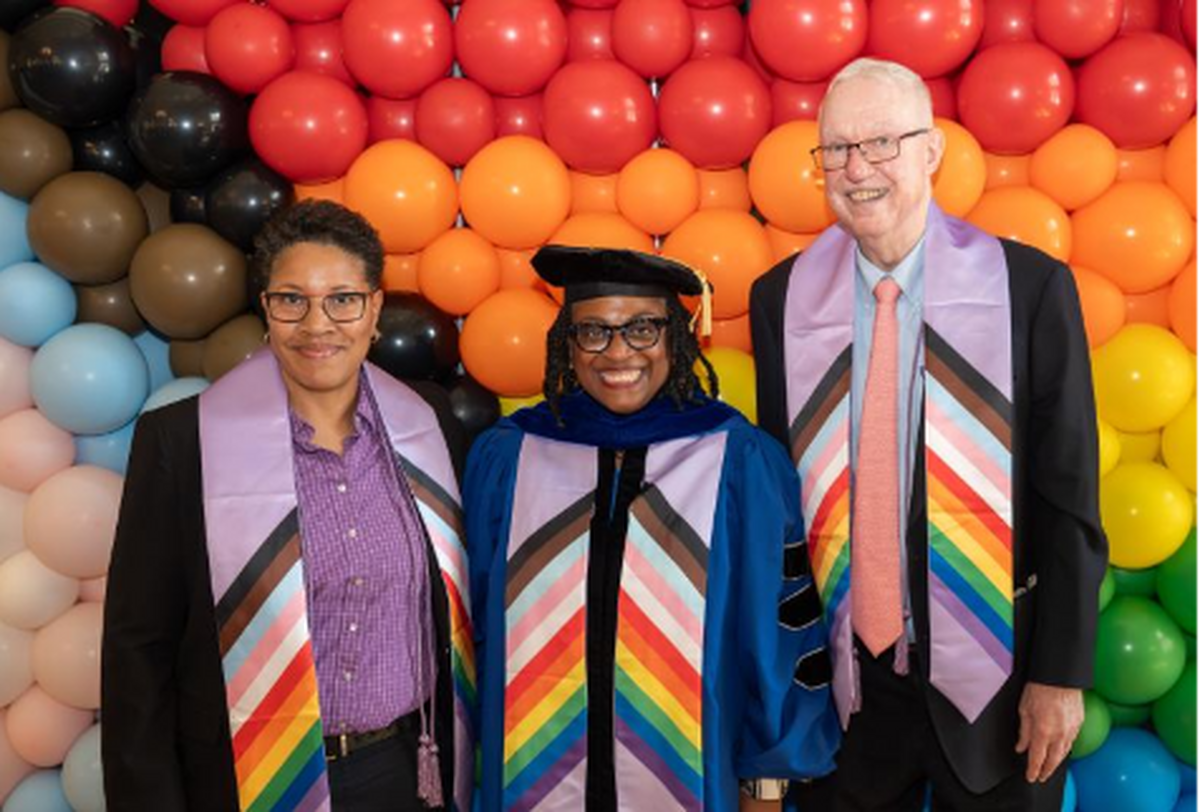
2007: UIUC has its first Lavender Graduation ceremony.
2008: In February, UIUC hosts the Midwest Bisexual, Lesbian, Transgender, Ally College Conference (MBLGTACC). Over 1500 students from around the Midwest enjoy three days of lectures, over 70 workshops, entertainment, and a dance held at CIRCE. The MBLGTACC was the largest conference for LGBTQ+ students in the nation up to that time.
The Office’s name changes to the Lesbian, Gay, Bisexual and Transgender Resources Center to better reflect its role in the campus community and to make it more equal to the university’s other cultural centers.
2009: Uniting Pride is founded and provides support, education, and Pride activities for the local LGBTQIA2S+ community.
2013: The Campus Union for Trans Equality and Support (CUTES) is founded to provide a space for trans students to build community.
2014: Uniting Pride hosts Champaign-Urbana’s first Pride parade.
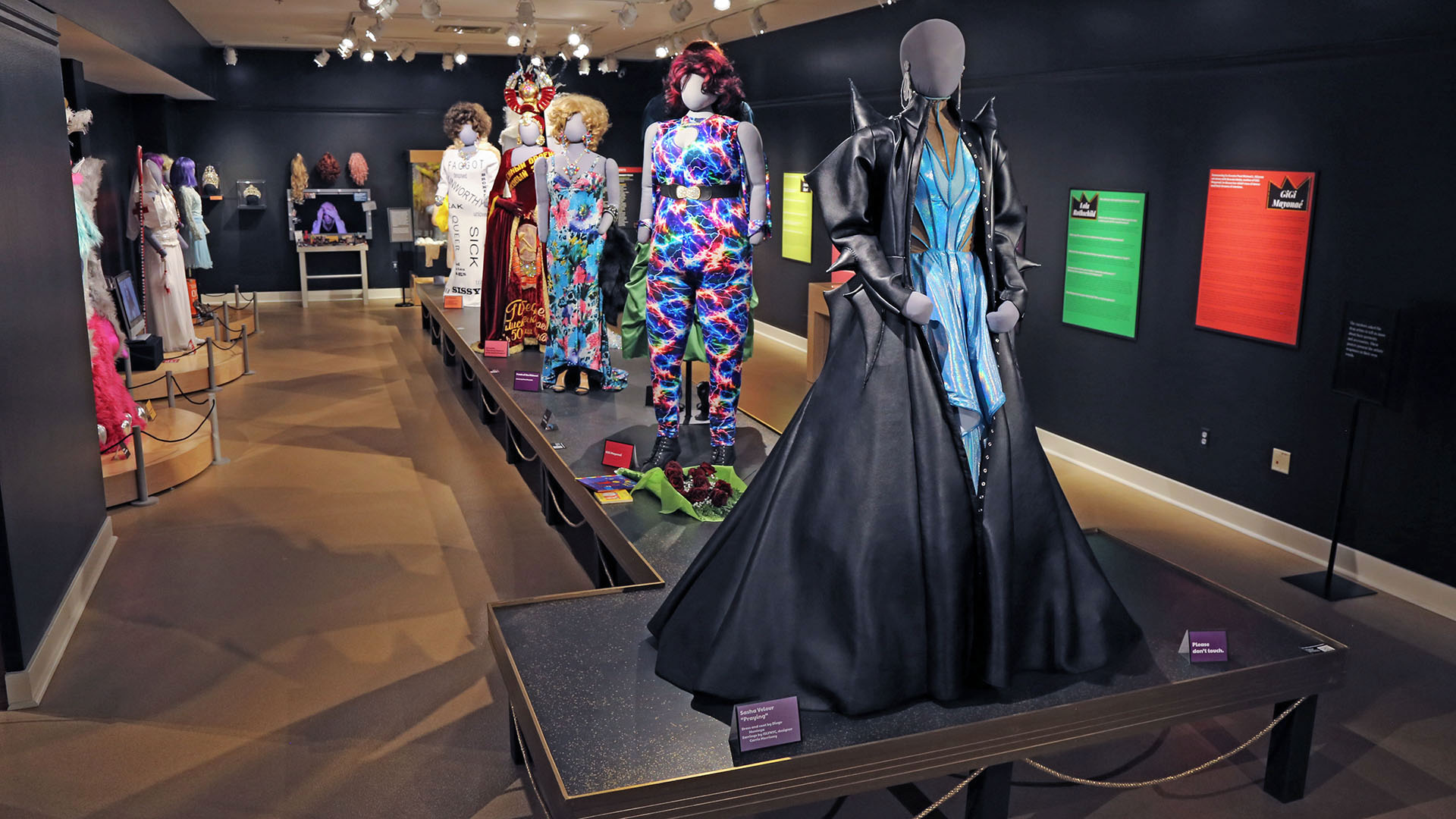
2019: The Spurlock Museum curates an exhibit on drag called “In Her Closet- How to Make a Drag Queen."
2020: Sreelakshmi Suresh, a graduate student, founds Foraging Unity, Solidarity, and Equity for QTPOC [queer and transgender people of color] (FUSE). Suresh created FUSE because they noticed a lack of community spaces for queer people of color.
2024: Students of "GWS 467: Locating Queer Culture," taught by Siobhan Somerville, conduct interviews, create transcripts, and present oral historiess, continuing the important archival and research of queer studies at Illinois.
2025: The Spurlock Museum’s exhibit “Rainbow Reflections” features AIDS quilt panels on loan from the Greater Community AIDS Project.