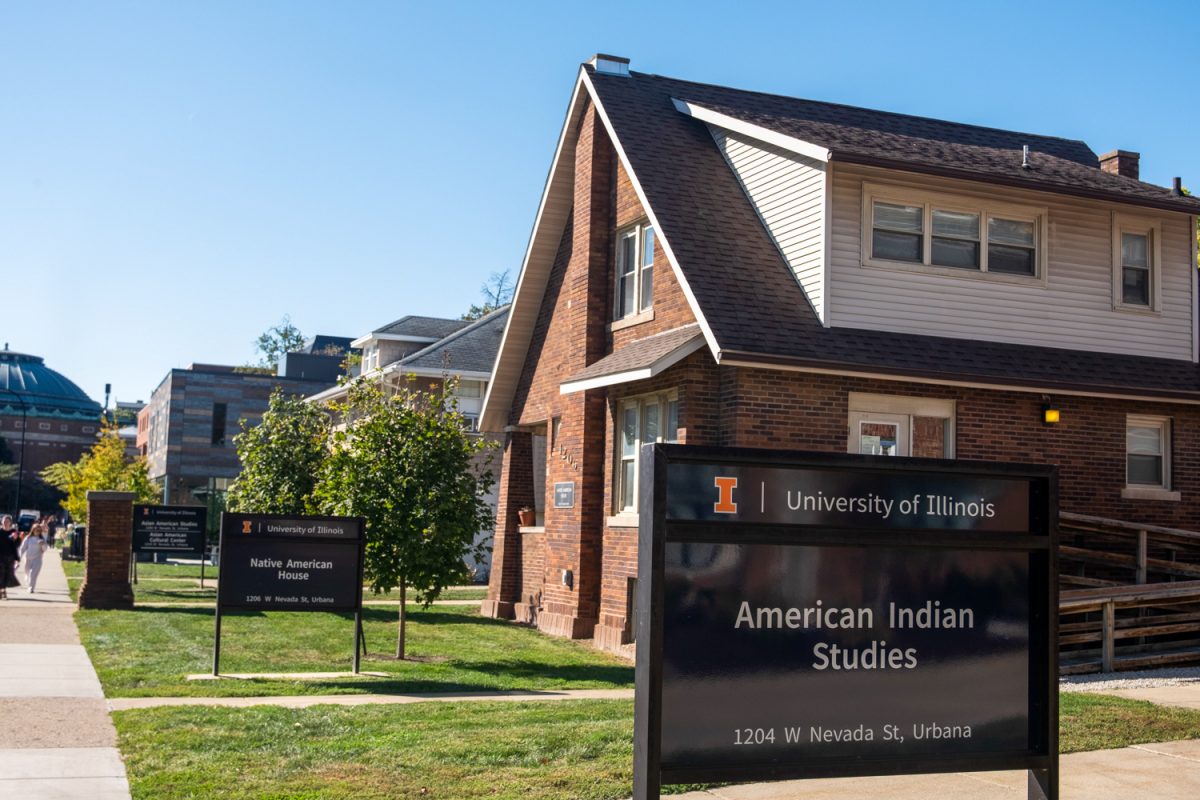
Students and faculty involved with student resource centers such as the Ethnic, Gender, and Women’s Studies building and La Casa Cultural Latina reported poor working conditions and inadequate facilities during the Sept. 28 University Senate meeting. Speakers addressed the Senate in support of Resolution EQ.24.03.
The resolution, which called on University administration to prioritize funding for new cultural and academic resource centers, was passed following the speakers’ remarks and a proposal concerning these issues.
In addition to new facilities, the resolution calls on University administration to secure temporary facilities and provide annual reports outlining their progress in addressing these problems.
Brian Fulton, senior director of administration at Gies College of Business, said the construction of new facilities is necessary, considering their current state.
“The current buildings are not tenable,” Fulton said. “They need to be torn down.”
According to Fulton, the cultural houses suffer from significant infrastructure damage and accessibility issues.
"There are no elevators,” Fulton said. “If anyone in that department were to have any mobility concerns, just even accessing the facility would be almost impossible.”
Toby Beauchamp, professor in LAS, described the conditions in the GWS department during the Senate meeting. On top of accessibility issues, Beauchamp said the GWS building consistently suffers from flooding, broken windows and moldy ceiling tiles.
Beauchamp added that the current state of the department hinders academic achievement.
“Although our faculty regularly win awards for scholarship and teaching, our visibly poor working conditions impede our efforts to convince students that there is a vibrant and valuable future for them in pursuing a degree for our field,” Beauchamp said.
Despite their importance, Fulton said the cultural houses are often overlooked in favor of other campus projects. The University has an extensive deferred maintenance list consisting of at least $795 million in backlogs.
However, Fulton and other speakers expressed the importance of prioritizing these buildings and their patrons, due to their widespread cultural and academic significance.
“They are representative of identities in our society that have not had equal treatment, equal access, equal opportunity, and so the continued study of those identities, their history, their importance is essential for the continued evolution of our American society,” Fulton said.
Despite the University’s previous inaction, Fulton expressed hope that the administration would now support the facilities and the marginalized communities they represent.
“I believe, strongly, that this institution has long strived to be better, and I’m hopeful that this is an opportunity for them to do so,” Fulton said. “I want this to happen. I want these folks to have a better place.”
Beauchamp also implored the University to reaffirm its commitment to these cultural institutions.
“At a moment when gender and ethnic studies are directly targeted … when the U.S. Department of Education explicitly celebrates the closure of departments in our fields, our physical space should not communicate institutional abandonment, but should demonstrate the University’s active investment in our field." - Beauchamp